
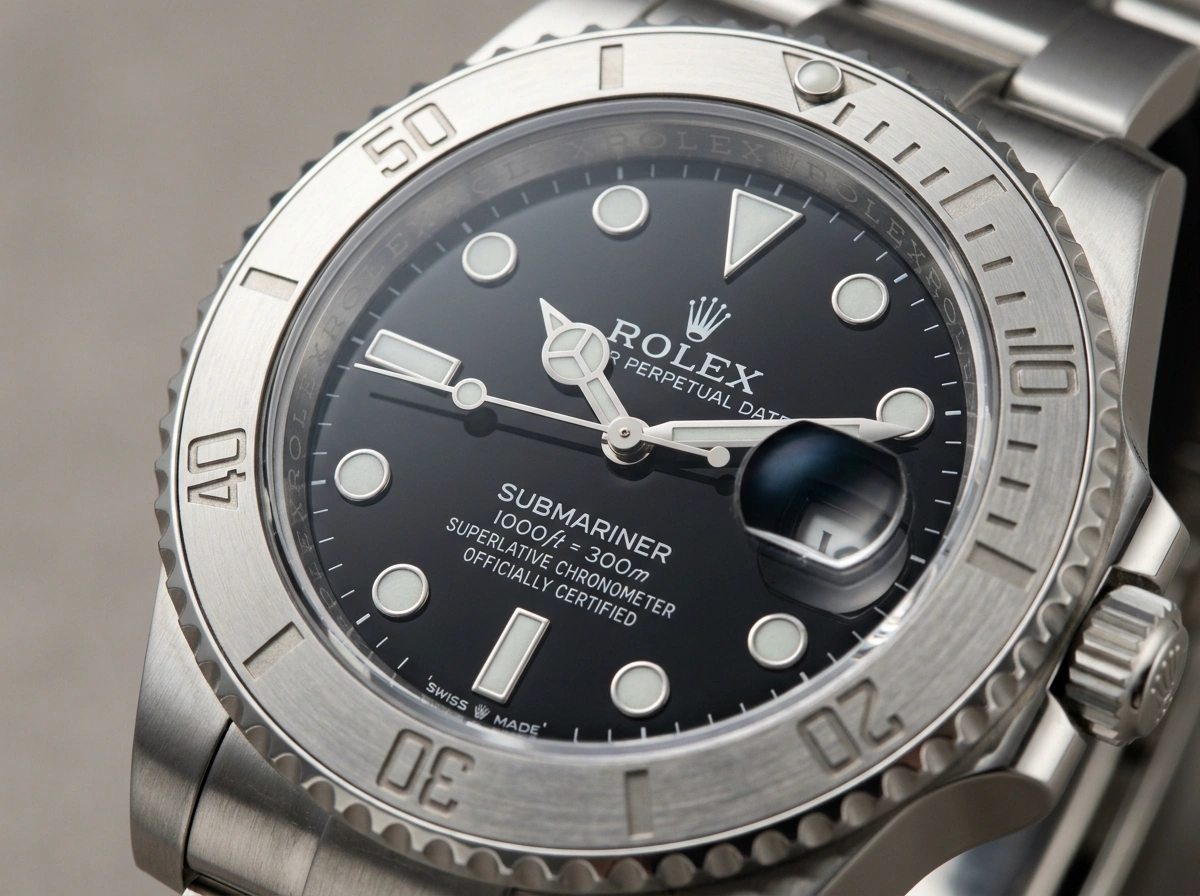
The dial and bezel are the face of any Rolex watch. They are also the two components where quality differences show up fastest. When you look closely at a replica, these areas tell you almost everything you need to know about the craftsmanship behind it. A skilled maker pours attention into every printed line, applied marker, and machined edge. A careless one cuts corners that become obvious under magnification or even in plain daylight.
Understanding these details helps you separate a convincing high-grade piece from a rushed knockoff. Below, we break down the specific dial and bezel features that reveal where quality stands, and why each one matters so much.
Why the Dial and Bezel Matter Most
People notice the dial first. It carries the brand name, the model text, the markers, and the hands. The bezel frames everything and often defines the model’s identity. Because both sit in your direct line of sight, any flaw becomes a constant reminder.
Genuine Rolex production relies on precision tooling, controlled printing, and tight quality checks. The closer a replica comes to matching those standards, the harder it becomes to spot. The gaps appear in the small things, and those small things add up. Collectors who study a quality rolex superclone tend to focus on these exact areas because they reveal the maker’s true skill level.
Dial Printing Sharpness
Dial printing is the first giveaway. On a high-grade piece, every letter sits crisp and clean. The text has uniform thickness, smooth edges, and zero bleeding. The coronet logo shows fine detail in each point of the crown.
Lower-quality dials show fuzzy edges, uneven ink density, and slightly blurred lettering. Sometimes the spacing between words feels off, or the font weight looks too heavy. Under a loupe, poor printing looks pixelated or grainy rather than solid and continuous. The best makers use the right ink and proper printing methods, so the text looks pressed into the dial rather than sitting on top of it.
Applied Markers and Indices
The hour markers tell a deep story about quality. On a genuine watch, applied markers are individually placed metal pieces with polished surfaces and clean edges. They reflect light evenly and sit perfectly aligned around the dial.
A strong replica matches this with markers that are properly seated, level, and centered. Each one should catch light the same way as its neighbors. Weak versions reveal markers that lean slightly, sit at uneven heights, or have rough edges where the metal was cut. Sometimes the polish quality differs, leaving some markers brighter than others. Misalignment, even by a fraction, breaks the symmetry that defines a luxury timepiece.
Lume Consistency
Luminous material should glow evenly and look uniform in daylight. On quality pieces, the lume fills each marker and hand completely, with no gaps, bubbles, or uneven edges. The color of the lume when unlit should match across all markers, usually a clean off-white or specific tone depending on the model.
Cheaper dials show patchy lume application. You might see thin spots, overfilled markers that look messy, or color differences between the hands and the markers. The glow strength also varies. A top-tier replica uses better luminous compound that charges well and glows strong and steady, while a low-grade one fades quickly and looks dull. Inconsistent lume is one of the easiest flaws to catch once you know what to look for.
Date Window Alignment
The date window demands precision. The number should be centered perfectly within the window, both horizontally and vertically. The font must match the genuine style, with correct digit shape and spacing.
Many lower-quality replicas fail here. The date sits too high, too low, or shifts to one side. Sometimes the font looks wrong, with digits that are too thin or too tall. The white date disc may show a slightly off-white tone that clashes with the dial. A clean, centered date with the correct font signals careful assembly and attention to detail.
Cyclops Magnification
The cyclops lens over the date is a Rolex signature. On a genuine watch, it magnifies the date roughly 2.5 times, filling the lens and making the number easy to read at a glance.
Weak replicas often use lenses with poor magnification, sometimes only 1.5 times. The date looks small under the cyclops, leaving empty space around it. The lens may also distort the number or sit at an awkward angle. A proper cyclops magnifies strongly, centers the date, and looks clear without warping. This single detail separates serious makers from careless ones.
Bezel Engraving Depth
Engraved bezels, like those on certain GMT and diving models, rely on clean, deep engraving. The numbers and markers should be cut precisely, with sharp edges and consistent depth all the way around.
Lower-quality bezels show shallow engraving that looks faint or uneven. Some numbers cut deeper than others, and the edges feel rough rather than crisp. When the engraving is filled with paint or lume, poor work leaves uneven fill or color spilling outside the lines. Deep, uniform engraving with clean fill shows the maker invested in proper machining.
Ceramic Insert Quality
Modern Rolex models use ceramic bezel inserts that resist scratches and hold color beautifully. A quality ceramic insert has a smooth, glossy finish with deep, rich color and perfectly applied numerals. The platinum or gold coating on the markers looks bright and even.
Inferior inserts may use cheaper material that looks flat or slightly grainy. The color can appear washed out, and the markers might lack the metallic shine of the real thing. Some low-grade inserts show tiny imperfections in the surface or uneven gloss. A premium ceramic insert feels solid and looks deep, almost glowing under light.
Bezel Click Action
The way a rotating bezel turns reveals build quality instantly. A genuine Rolex bezel clicks with firm, precise stops. Each click feels solid, evenly spaced, and confident. There is no wobble or play.
Cheaper replicas often have loose, mushy bezels that turn too easily or skip clicks. Some feel gritty or inconsistent, with stronger resistance in some spots than others. A high-grade replica matches the satisfying, precise click of the original, which requires a quality bezel mechanism underneath. This tactile detail is hard to fake well.
Color Accuracy
Color ties everything together. Whether it is the dial shade, the bezel hue, or the tone of the markers, accurate color matters enormously. Rolex uses specific shades, and a true match requires careful production.
Off-tone colors are a common flaw. A blue dial that leans too purple, a green bezel that looks too bright, or a black surface that appears more charcoal can all betray a lower-quality piece. The best makers study and match these tones precisely so the colors look correct in different lighting. When the color is right, the whole watch feels authentic.
Conclusion
The dial and bezel hold the secrets to a replica’s true quality. Sharp printing, level applied markers, even lume, a centered date, strong cyclops magnification, deep bezel engraving, premium ceramic, crisp click action, and accurate color all work together to define the final result. When each of these details is done right, the piece looks and feels refined. When even one is neglected, the gap becomes obvious.
By learning to study these specific features, you gain the ability to judge craftsmanship with confidence. The face of a watch never lies, and the closer you look, the more it tells you about the care behind it.